Contact Us



Welcome to Pudong New Area
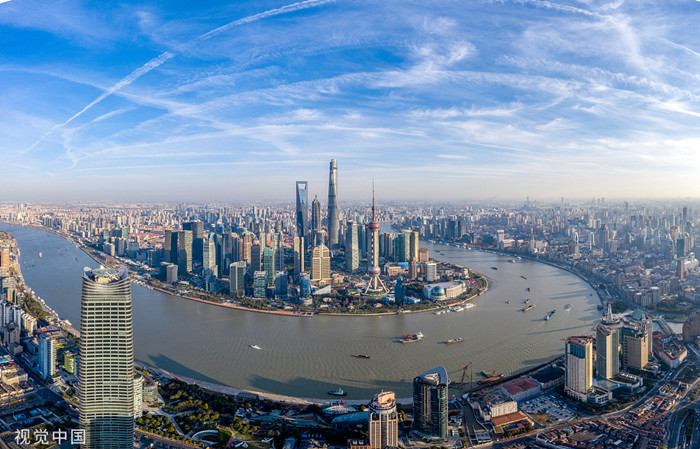
Pudong New Area is the premier destination in Shanghai for investors, talents and innovators. [Photo/VCG]
Pudong New Area is the premier destination in Shanghai for investors, talents and innovators.
Home to the China (Shanghai) Pilot Free Trade Zone (Shanghai FTZ) and a host of world-class business parks, Pudong has the most supportive business environment in the city.
The district offers unbeatable policy support for businesses, a streamlined administrative system and public security services to help expats find work and obtain residence permits quickly and conveniently.
Come and explore YOUR Pudong!
Overview of Pudong New Area
1. History
Pudong, which used to be referred to as Chuansha, dates back to the Northern and Southern Dynasties (420-581). It was originally part of Huating county, Shanghai county and the Chuansha Civil Center during the Tang (618-907), Yuan (1271-1368) and Qing (1644-1911) dynasties, respectively. It became a county of Jiangsu province during the Revolution of 1911.
In 1949, Chuansha was moved from the jurisdiction of Jiangsu province to that of Shanghai, where it remains to this day.
On April 18, 1990, the Party Central Committee and the State Council decided to make Pudong a national development area, opening a new chapter in its history.
In 1993, Chuansha county became Pudong New Area and was enlarged with the establishment of Huangpu and Yangpu districts.
In June 2005, the State Council approved the Pudong New Area's role as the first pilot area for comprehensive reforms.
In 2009, the Nanhui Administrative Region was made subordinate to Pudong New Area, marking the beginning of the second round of development in Pudong.
In August 2013, the State Council decided to establish the Shanghai FTZ in Pudong.
In December 2014, the State Council approved the expansion of the Shanghai FTZ.
In August 2019, the Lin-gang Special Area was officially established as a new part of the Shanghai FTZ, and many people expected the area to become a new driver of China's opening-up.
2. Economic overview
Pudong New Area's GDP reached 1.88 trillion yuan ($277.23 billion) in 2025, up 5.7 percent year-on-year. Its general public budget revenue hit 134.31 billion yuan, and total foreign trade volume reached 2.76 trillion yuan. The area has continued to serve as a stabilizer and driver of Shanghai's economic development, accounting for about one-third of the city's total GDP.
The gross industrial output value above designated size in Pudong totaled nearly 1.39 trillion yuan in 2025, an increase of 8 percent from the previous year. The output value of Pudong's three leading industries — integrated circuits, biomedicine, and artificial intelligence — reached 382.96 billion yuan, 449.42 billion yuan, and 198.21 billion yuan respectively in 2025, representing a total growth of 7.1 percent.
For 2026, Pudong aims to grow its GDP by over 5 percent, industrial added value by 5 percent, and general public budget revenue by 2 percent. Fixed-asset investment is expected to maintain steady growth.
3. Geographical location
Pudong is situated on the east bank of the Huangpu River, at the intersection of China's coastal belt and the Yangtze River estuary. It borders the Yangtze River Delta urban megalopolis on one side and the Pacific Ocean on the other. With an average elevation of 3.87 meters, its altitude drops from west to east, and it has a 115-kilometer coastline.
4. Administrative Division
Pudong New Area has a total area of 1,210 square kilometers and a permanent resident population of 5.79 million. It consists of 12 sub-districts and 24 towns.